
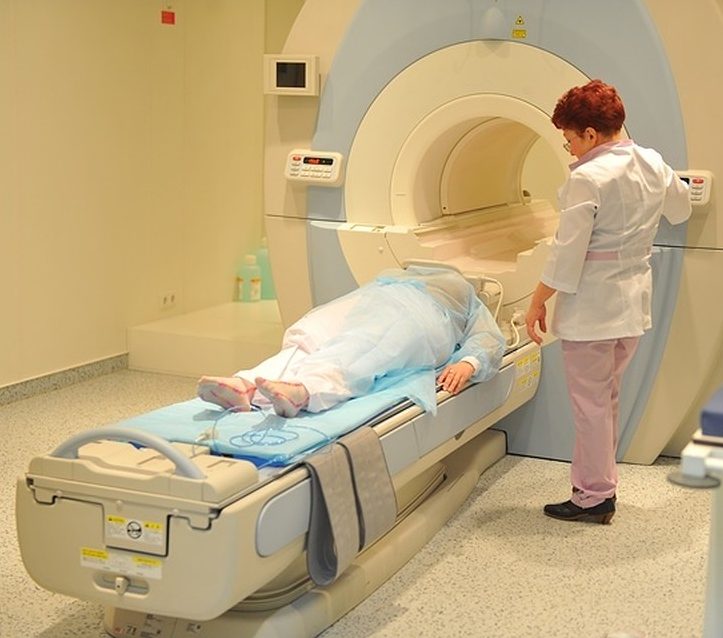
It must be understood that changes in the disks, joints, ligaments of the spine structures – which are different from the norm in the picture – NOT always cause pain.
Clinical studies have shown that almost 30% of people aged 30-40 years in the MRI scan have intervertebral hernias. However, these people never hurt their back.
And, on the contrary, there can be no hernia or protrusions on MRI, and the pain in the back will be unbearable.
Fortunately, such cases are fairly rare.
The easiest thing for a patient is to “treat” the obvious, focusing on reducing the size of the hernia. Although the problem for most patients is much more complicated – the problem is in the state of the musculoskeletal system of the spine – deep muscles of the back, facial joints, ligaments and tendons.
It is these structures that are often responsible for pain. Including, for excessive pressure on disks during movement and loads.
The weakness of the muscular corset of the back leads to a reduction of gaps between the bone component of the joints, when the cartilage tissue wears out.
Mobility of the joints decreases; some joints may be unstable.
Only MRI can not fully investigate the status of muscle corset, the strength and endurance of certain muscle groups.
The best research is functional testing by a vertebrologist and a physical therapist.
Only the doctor decides to send to the MRI. The direction is obtained after consultation, which determines the location of the image, the contrast, the power of the lamp.
Having studied the functional state – the doctor is an individual program of recovery of back functions.

Leave A Comment